

Table of Contents
- Why Graphic Tees Fade: Print Types and What Causes Color Loss
- How to Wash Screen Printed Shirts Without Damaging the Design
- Detergent Science: What to Use and What to Avoid on Graphic Tees
- Drying Matters: Air Dry vs. Tumble Dry Low for Print Longevity
- How to Fix a Cracked Graphic on a Shirt: Repair and Restoration Options
- Stain Removal on Graphic Tees Without Ruining the Print
- Caring for Graphic Tees Long-Term: Habits That Add Years
- Frequently Asked Questions
Last Updated: September 26, 2026
Why Graphic Tees Fade: Print Types and What Causes Color Loss
Graphic tees fade because heat, friction, and harsh chemicals break down the bond between ink and fabric. That bond works differently depending on how the design was printed, and knowing your print type is the first step in learning how to keep graphic tees from fading.
| Print Type | How It Bonds | Main Weakness | Fades From |
|---|---|---|---|
| Screen print | Ink layer on top | Cracking | Heat, friction |
| DTG | Ink in the fibers | Fading | Hot water, agitation |
| Heat transfer | Pressed-on film | Peeling | Heat, stretching |
How to Wash Screen Printed Shirts Without Damaging the Design
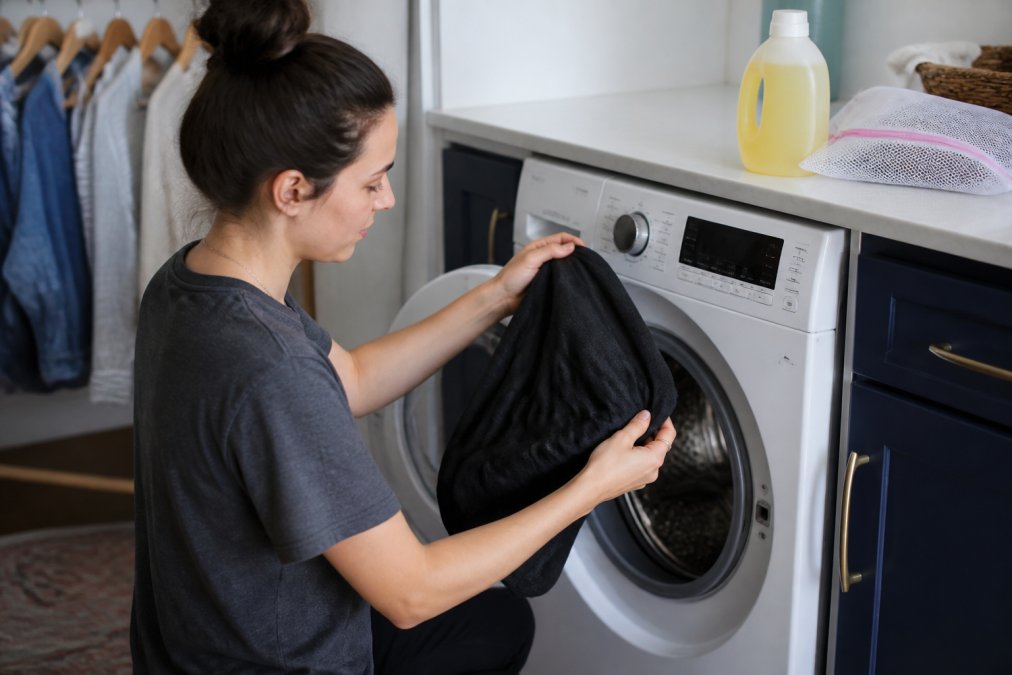
The short answer: turn the shirt inside out, use cold water on a delicate cycle, and skip the dryer. That baseline protects every print type. But screen print, DTG, and heat transfer vinyl each fail differently, so the wash routine should shift depending on what's on the shirt.
Match the Wash to the Print Type
Screen print (plastisol ink): Plastisol is a PVC-based ink that cures into a rubbery film sitting on top of the fabric. It's the most wash-durable of the three, but it cracks when flexed cold or heated past its softening point. Cold water and low agitation keep the film pliable. Avoid stacking heavy items on top of it in the drum.
Step-by-Step: The Cold Water, Inside-Out Wash Method
- Turn the shirt inside out. This puts the design against itself, not against other clothes.
- Zip and button everything else in the load. Zippers act like sandpaper on prints.
- Use cold water only. Cold water keeps plastisol from softening and slows dye bleed in DTG ink.
- Choose the delicate cycle. Less agitation means less friction on the design.
- Add a small amount of gentle liquid detergent. More on this in the next section.
- Skip fabric softener entirely. It coats fibers and dulls print color.
- Wash graphic tees separately from towels, jeans, and anything with hardware.
- Pull shirts out the moment the cycle ends. A wet print sitting against itself in a damp drum is where DTG fading and HTV edge-lift start.
A common mistake is washing a graphic tee with a full load of heavy items. The print rubs against denim for an hour. That friction alone can fade a design in a few washes.
Detergent Science: What to Use and What to Avoid on Graphic Tees
Detergent choice matters more than most people think. The wrong formula attacks the ink itself, not just the fabric.
What to avoid:
- Bleach breaks down dye molecules in both fabric and ink. One wash can visibly lighten a print.
- Fabric softener leaves a waxy coating that traps dirt and dulls colors.
- Enzyme-heavy detergents (often labeled "bio") digest protein and starch stains, but they can also weaken water-based DTG inks.
- Powder detergents may not fully dissolve in cold water and leave abrasive grit.
What to use:
- A gentle liquid detergent made for colors
- Free-and-clear formulas with no dyes or perfumes
- Half the recommended dose for a normal load
Drying Matters: Air Dry vs. Tumble Dry Low for Print Longevity
Air drying is the single best thing you can do for a graphic tee. Heat from a dryer is the top cause of cracking, peeling, and shrinkage.
- Air dry: Lay flat or hang inside out, away from direct sun. Best for longevity.
- Tumble dry low: Acceptable in a pinch. Remove promptly.
- Tumble dry high: Avoid. This is where cracking and peeling start.
- Dryer sheets: Skip them. They leave residue that dulls prints.
How to Fix a Cracked Graphic on a Shirt: Repair and Restoration Options
Most guides tell you cracked ink is permanent. That's only half true. You can't un-crack plastisol, but you can re-flow it, stabilize it, and in many cases make the damage nearly invisible from normal viewing distance. The repair depends on which print type failed.
Diagnose the Damage First
- Fine hairline cracks in a screen print: The plastisol film has dried out and lost plasticizer. This is the most repairable case.
- Wide cracks with visible fabric underneath: The ink layer has physically separated. Re-flowing can close the gaps but won't restore full opacity.
- Curling or lifting edges on HTV or transfer film: The adhesive layer has failed. This is a re-bonding problem, not an ink problem.
- Overall dulling or color loss with no cracking: This is fading, not cracking. No repair will bring the color back, see the storage and wash sections to slow further loss.
Repair Method 1: Heat Re-Flow (Best for Screen Print)
Plastisol is a thermoplastic. It softens when heated and re-hardens when cooled. That property is what makes hairline cracks closable.
- Turn the shirt inside out and place it on a firm, heat-safe surface. A folded towel under the design works.
- Lay a sheet of parchment paper over the design (or a thin cotton pressing cloth).
- Set an iron to its lowest steam-free setting, typically the synthetic or silk setting, around 250-275°F on most home irons.
- Press firmly for 10-15 seconds, then lift and check. Do not slide the iron; sliding smears softened ink.
- Repeat in 10-second passes until cracks close. Overheating will scorch the fabric or flatten the print into a shiny patch.
Repair Method 2: Fabric Glue or Medium (Best for Wide Cracks)
For cracks too wide to re-flow, a fabric-safe adhesive or fabric painting medium can bridge the gap.
- Use a clear fabric glue or a fabric medium designed to mix with acrylic paint. Generic superglue will stiffen the print and crack again.
- Apply with a fine-tip applicator or toothpick, working the medium into the crack.
- Wipe the surface flat with a damp fingertip so the repair sits level with the surrounding ink.
- Let it cure fully, most fabric glues need 24 hours before washing.
Repair Method 3: Re-Adhering Lifted HTV or Transfer Film
Peeling vinyl is a different failure mode, and the fix is heat plus pressure.
- Turn the shirt inside out.
- Place parchment paper over the lifted area.
- Press with a low iron for 10-15 seconds, focusing pressure on the lifted edge.
- Let it cool completely before flexing the shirt. The adhesive needs to set as it cools, not while it's warm.
Repair Method 4: Cover It Up
For small logos or simple shapes, an iron-on patch or a new heat transfer applied directly over the damaged area is the most durable option. It's also the only repair that fully hides the original damage rather than masking it.
What Doesn't Work
- Ironing directly on the print. The ink sticks to the iron and smears. Always use parchment or a pressing cloth.
- Steam. Moisture plus heat drives ink into the fabric unevenly and can cause bleeding on DTG prints.
- Acrylic paint without fabric medium. It dries stiff, cracks within a few washes, and looks worse than the original damage.
- Restoration services. They exist, but for a single graphic tee the cost usually exceeds replacing the shirt. Reserve them for vintage or sentimental pieces.
Stain Removal on Graphic Tees Without Ruining the Print
Stain removal on a printed shirt requires a different approach than on a plain tee. Harsh stain treatments can strip print color along with the stain.
The safe method:
- Blot the stain, don't rub. Rubbing pushes it into the fibers and spreads it.
- Apply a small amount of gentle liquid detergent directly to the stain.
- Let it sit for 10-15 minutes.
- Rinse with cold water.
- Repeat if needed before washing.
What to avoid:
- Chlorine bleach on any colored print
- Hot water, which sets protein stains like blood or sweat
- Scrubbing with a brush, which abrades the ink
Caring for Graphic Tees Long-Term: Habits That Add Years
Small habits add up. Rotating your tees, washing them less often between wears, and storing them folded instead of hung all reduce wear.
- Wash less. Spot clean when you can. Every wash adds friction.
- Rotate your rotation. Fewer wears per shirt means slower fading.
- Fold, don't hang. Hangers stretch the shoulders and can crease prints.
- Store out of sunlight. UV light fades ink over months, not just hours.
Frequently Asked Questions
Does hot water ruin graphic tees?
Hot water speeds up dye loss and weakens the bond between the print and the fabric, which leads to faster cracking and peeling. Cold water wash settings (around 60-80°F) are the safest choice for graphic tees. If a shirt is heavily soiled, a warm setting may be acceptable occasionally, but cold water combined with a gentle or delicate cycle protects print integrity and color retention over the life of the garment.
Should I turn my shirts inside out before washing?
Yes. Turning graphic tees inside out reduces friction between the print and other garments in the wash cycle. That friction is one of the main causes of cracking and peeling on screen print and DTG designs. Pair inside-out washing with a cold water setting and a delicate cycle, and avoid overloading the machine. These laundry habits cost nothing extra and can add years to a graphic tee's lifespan.
What is the best detergent for graphic apparel?
A mild, liquid detergent without bleach or fabric softener works best for graphic apparel. Bleach breaks down dyes and print adhesives, while fabric softener leaves a residue that can dull colors and weaken heat transfer or vinyl graphics over time. For screen printed shirts, use the smallest effective amount of detergent; excess soap leaves residue that traps dirt and speeds up fading. Always check the shirt's wash instructions tag first.
Can I fix a cracked graphic on a shirt once it starts peeling?
Small cracks and lifted edges can sometimes be repaired with a heat press or an iron on a low setting with a pressing cloth, which reactivates the adhesive on heat transfer and vinyl graphics. For screen print or DTG designs, a fabric marker matched to the ink color can camouflage minor cracking. Once large sections peel away, restoration is limited. Preventing friction and heat damage from the start is far more effective than repair.
Graphic tees fade from heat, friction, and harsh chemicals, not from wearing them. Cold water, inside-out washing, gentle detergent, and air drying will keep prints sharp for years. When you're ready to add bold, unapologetic designs to your rotation, Bitch Alert offers inspirational graphic tees, vintage cowgirl styles, and regional pride apparel made to last. Get started with Bitch Alert and wear your personality on your sleeve, wash after wash.