

Table of Contents
- What Makes High Quality Graphic Apparel: The Five Things That Decide It
- How to Tell if a T-Shirt Is Good Quality Before You Buy
- The Best Fabric for Graphic Tees (And Why Weight Matters More Than Softness)
- Graphic Tee Printing Methods: Screen Printing, DTG, and DTF Compared
- Print Durability: Why Graphics Crack, Fade, and What Actually Prevents It
- How to Wash Graphic Tees So the Artwork Survives
- Fit, Sizing, and the Details That Make a Tee Wearable
- Frequently Asked Questions
Last Updated: October 17, 2026
What Makes High Quality Graphic Apparel: The Five Things That Decide It
High quality graphic apparel is clothing where fabric, construction, print method, and fit all hold up together over time, not just in the first photograph.
This guide covers what separates long-lasting apparel from disposable novelty shirts, how to judge a tee in under a minute, how to wash graphic tees so the artwork survives, and the print methods behind the designs.
How to Tell if a T-Shirt Is Good Quality Before You Buy
You can judge a graphic tee's quality in about sixty seconds by checking five things: seams, collar, fabric weight, print, and label. Most shoppers only look at the design; the people who get years out of a shirt look at everything else first.
The Five-Point Check: Seams, Collar, Weight, Print, and Label
- Seams: Turn the shirt inside out. Look for double-needle stitching and clean, tight overlock at the sides and hem. Loose, single-row stitching pulls apart at the armpits first.
- Collar: A ribbed knit collar with shoulder tape holds its shape. A thin, unstabilized collar will stretch into a wave after a few wears.
- Weight: Hold it up to light. If you can read a newspaper through it, it is too thin for a graphic tee that needs to survive regular wear.
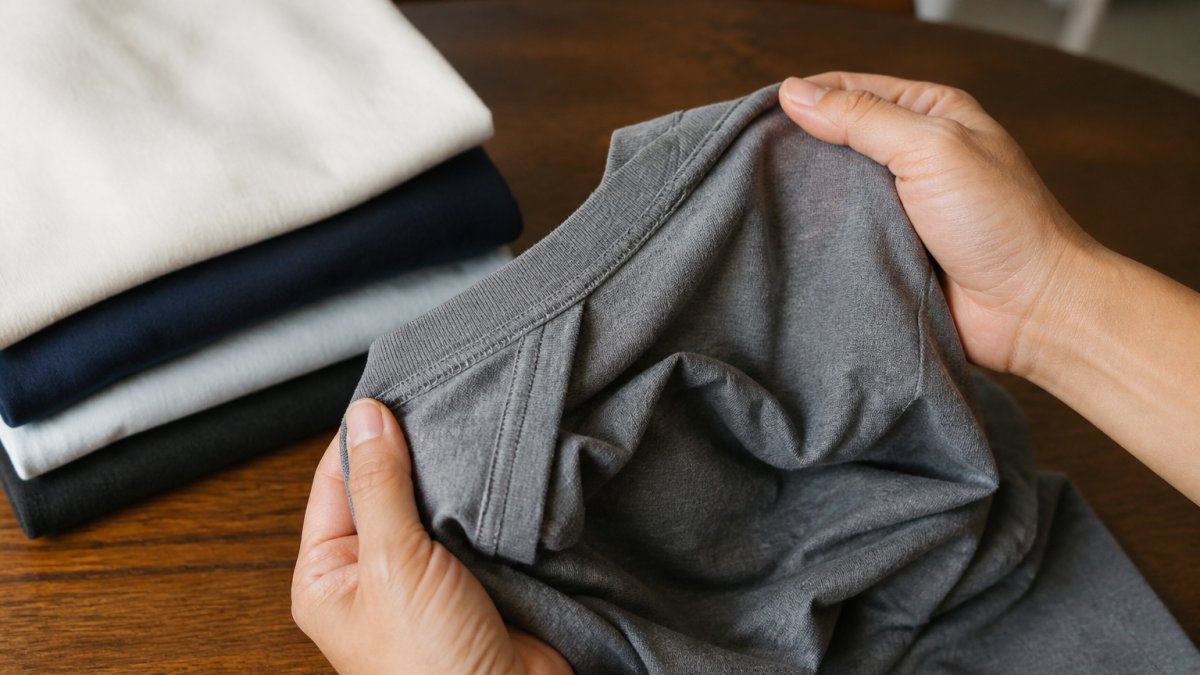
A common mistake is judging softness as quality. A shirt can feel wonderful on day one and pill, thin out, or lose its shape within a month. Softness is a starting point; structure keeps the shirt wearable.
The Best Fabric for Graphic Tees (And Why Weight Matters More Than Softness)
The best fabric for graphic tees is 100% cotton in a medium to heavyweight knit, typically 180 g/m² and up, because heavier cotton holds a print better, resists see-through, and keeps its shape through repeated washing.
Fabric Weight, Thickness, and Breathability in Plain Numbers
Fabric weight is measured in grams per square meter (g/m²) or ounces per square yard. Here is how the ranges behave in practice:
| Weight Range | Feel | Best For | Print Performance |
|---|---|---|---|
| Under 150 g/m² | Very light, sheer | Layering, warm climates | Print can distort as fabric stretches |
| 150-180 g/m² | Light to medium | Everyday wear | Good, but thinner ink coverage shows |
| 180-220 g/m² | Medium, substantial | Graphic tees, year-round wear | Excellent ink hold and color saturation |
| 220+ g/m² | Heavyweight | Streetwear, structured fits | Best durability, less breathable |
Heavier cotton is not automatically better: a heavyweight tee in a humid summer feels like wearing a towel. Medium-weight cotton at 180 g/m² balances breathability with durability, which is why it is the standard for graphic tees that need to survive regular wear.
How to Measure Fabric Quality Yourself (Not Just Read the Spec Sheet)
Most listings stop at weight, but weight is a starting point, not a verdict.
**1.
2. Shrinkage. Quality makers pre-shrink or garment-wash fabric so residual shrinkage stays in the low single digits.
3. Colorfastness. Dye that bleeds or crocks (rubs off) ruins a graphic even when the print itself is fine.
4. Pilling and surface stability. Turn the shirt inside out and look at the inside face of the fabric.
Fiber Content: What Cotton, Blends, and Synthetics Do to a Print
Fiber content matters as much as weight, because fibers accept ink, shrink, and age differently.
- 100% cotton gives breathability and a print surface that accepts ink well. It is the safest bet for a graphic tee, but it shrinks more than blends unless pre-shrunk and can pill if the knit is loose.
- Cotton/polyester blends add stretch, wrinkle resistance, and warmth, and shrink less. Polyester can hold heat and odor, and DTG ink on blends sometimes needs a binder or pretreatment to bond.
- Tri-blends (cotton/polyester/rayon) feel soft and drape well, but rayon is weaker when wet and can stretch out of shape, so tri-blend tees need gentler washing and flat drying.
Knit Structure: Why Tubular Beats Side-Seamed for Print Stability
Two tees can weigh the same and behave differently because of how they are knit. A tubular knit is knit in a continuous tube with no side seams, so nothing pulls against a seam and the body keeps its shape through the wash.
For graphic tees, tubular construction is a quiet quality signal: fewer seams mean fewer failure points and a more stable print surface. A maker that specifies tubular knit and states a shrinkage tolerance is telling you the shirt was engineered, not just assembled.
Graphic Tee Printing Methods: Screen Printing, DTG, and DTF Compared
Screen printing pushes thick ink through a mesh screen.
DTG prints directly onto the garment like an inkjet printer. It handles detailed, photographic, and multi-color artwork without setup costs, making it ideal for small batches.
DTF prints the design onto a film, then heat-presses it onto the fabric.
Embroidery stitches thread directly into the fabric.
Heat transfer (vinyl or transfer paper) is the go-to for one-offs, names and numbers, and very small runs.
| Method | Best For | Color Saturation | Durability | Order Size Sweet Spot | Fabric Match |
|---|---|---|---|---|---|
| Screen printing | Bold, simple designs | Highest | Excellent | Larger runs | Cotton and cotton-rich blends |
| DTG | Detailed, multi-color art | High | Good | Small to mid runs | 100% cotton (pretreatment on darks) |
| DTF | Blends, sweatshirts, fine detail | High | Good | Any size | Almost any fabric |
| Embroidery | Logos, bold simple graphics | Limited by thread colors | Highest | Any size | Wovens, knits, caps |
| Heat transfer | One-offs, names, numbers | High | Lowest | Very small runs | Cotton and blends |
How to Choose a Print Method: A Decision Guide
Three questions narrow the field before you talk to a printer.
Alabama Proud Tee — "I'm a Proud Alabama Bitch" Graphic T‑Shirt →
1. How complex is the design? Photographic art, gradients, and many colors point to DTG or DTF. Bold, flat, few-color graphics point to screen printing.
2. What is the fabric? 100% cotton is the most forgiving surface and works with every method.
3. How many do you need, and how often will you reorder? Screen printing wins on cost per unit at volume because setup is spread across the run.
Mixing Methods: What Quality Makers Actually Do
Many quality makers use more than one method on the same garment. A common pattern is DTG for the main artwork and DTF for sleeve prints and inner labels, giving crisp, detailed graphics without sacrificing durability. Embroidery is often reserved for a chest logo or a cap while the body graphic is printed. Match each element of the design to the method that handles it best, then confirm the printer can cure and finish each one correctly.
Print Durability: Why Graphics Crack, Fade, and What Actually Prevents It
Graphics crack and fade for three reasons: too much ink sitting on top of the fabric, heat and friction during washing and drying, and fabric that stretches underneath a rigid print.
A print that cracks was usually laid too thick or cured unevenly: when the fabric flexes and the ink cannot, the ink splits.
The practical fix is simple: choose a maker that matches the print method to the garment, then treat the shirt the way the care label says.
How to Wash Graphic Tees So the Artwork Survives
Wash graphic tees inside out in cold water on a gentle cycle, skip fabric softener, and tumble dry on low heat or hang them to dry.
Here is the routine we recommend:
- Turn the shirt inside out before washing to reduce friction on the print.
- Use cold water (max 30°C or 90°F) on a normal or gentle cycle.
- Skip fabric softener and harsh bleach. Non-chlorine bleach is acceptable when needed.
- Tumble dry on low heat or air dry. Never iron directly over the graphic, and never dry clean a printed tee.
- Store folded, not on a wire hanger, to protect the collar shape.
A common mistake is washing a new graphic tee with heavy items like jeans and towels. The abrasion wears the print faster than anything else in your laundry routine. Wash graphic tees with lighter garments when you can.
Fit, Sizing, and the Details That Make a Tee Wearable
Fit and sizing decide whether a great shirt actually gets worn.
Look for a maker that publishes a real size chart with width, length, and sleeve measurements plus a stated tolerance. That tells you the shirt was cut to a spec, not guessed.
Accessibility matters too. A wide size range, clear measurements, and a relaxed cut that does not bind at the arms make graphic apparel wearable for more bodies.
At Bitch Alert, our Alabama Proud Tee shows how these details come together: 100% cotton at 180 g/m², tubular knit construction with no side seams, a ribbed knit collar with shoulder tape, dual DTG and DTF printing, and an OEKO-TEX certified, tear-away label.

Frequently Asked Questions
What makes a graphic tee high quality?
Four things decide it: fabric weight and fiber content, garment construction (seams, collar, shoulder tape), the print method and how well the ink bonds to the fabric, and the originality of the artwork itself. A 180 g/m² 100% cotton tee with a ribbed collar, shoulder tape, and a properly cured print will outlast a lighter shirt with a heat-pressed transfer every time. Price alone tells you very little about which of those boxes a shirt actually ticks.
How can you tell if a graphic T-shirt is well made before buying?
Turn it inside out. Look for clean, tight stitching at the shoulder and side seams, a ribbed collar that springs back when stretched, and shoulder tape running along the neckline to stop stretching. Check that the print sits flat with no raised plastic edges, and that the label is a tear-away or soft tag rather than a stiff woven one. If you are shopping online, look for a stated fabric weight, fiber content, and print method on the product page.
Which fabrics are best for graphic apparel?
Medium-weight 100% cotton, around 180 g/m², is the sweet spot for graphic tees: it holds a print crisply, breathes in summer, and survives repeated washing without going sheer. Heavier cotton (200 g/m² and up) suits sweatshirts and boxy fits. Cotton-poly blends resist shrinking and wrinkles but can pill. Avoid very thin, low-gram fabric for large prints, because the ink sits on a surface that stretches and distorts with wear.
What printing methods make graphic tees last longer?
Screen printing is the most durable option for bold, high-saturation designs and larger orders, because the ink cures into the fabric rather than sitting on top. Direct-to-garment (DTG) handles detailed, full-color artwork well and feels soft, but it needs a properly pretreated, high-cotton shirt to hold up. Direct-to-film (DTF) is versatile across fabric types and good for small runs. Whichever method is used, correct curing and washing inside out in cold water decide how long the print survives.
How should you wash graphic tees to keep the print looking good?
Machine wash cold (max 30C or 90F), inside out, on a gentle cycle with like colors. Skip fabric softener and chlorine bleach, which break down ink and fiber. Tumble dry on low heat or hang dry, and never iron directly over the graphic. Following these steps on a shirt with a quality print is the difference between artwork that looks sharp after two years and artwork that cracks after ten washes.
Why are some graphic t-shirts so expensive?
Price reflects fabric weight and fiber, print method, order size, and design work. A heavier 100% cotton blank, a screen-printed multi-color design, and original artwork all cost more to produce than a thin blank with a heat transfer. At Bitch Alert, tees run $22.50 and a midweight crewneck sweatshirt is $39.99, which keeps the focus on construction and printing rather than markup on a name.
Are graphic tees out of style in 2026?
No. Graphic tees remain a staple because they work across casual, streetwear, and vintage-inspired looks, and they let people wear a statement rather than a logo. What has shifted is the standard: buyers now ask about fabric weight, print durability, and whether the artwork is original. A well-made graphic tee with a design you actually connect to stays in rotation for years, which is the opposite of a trend piece.
High quality graphic apparel is not a mystery. It is fabric weight, honest construction, a print method matched to the design, and care that respects the label. If you want statement tees built to those standards, Bitch Alert offers bold, unapologetic designs on medium-weight cotton with ribbed collars, shoulder tape, and certified, ethically sourced materials, plus regional pride styles and novelty drinkware for everyday use. Browse the collection and wear your personality on your sleeve.