

Table of Contents
- Why Ceramic Mugs Chip: The Real Causes
- Thermal Shock in Ceramic Mugs: When Heat and Cold Collide
- How to Prevent Ceramic Mugs from Chipping
- Chip, Crack, or Crazing? How to Tell the Difference
- Is a Chipped Mug Safe to Use?
- How to Repair a Chipped Ceramic Mug
- When to Retire a Mug and What to Look For
- Frequently Asked Questions
Last Updated: October 14, 2026
Why Ceramic Mugs Chip: The Real Causes
Ceramic mugs chip because of impact damage, thermal shock, or flaws baked in during manufacturing. Most people blame one cause, but the truth is messier. A mug that chips in the dishwasher was often weakened weeks earlier by a knock against the sink.
At Bitch Alert, we sell novelty ceramic mugs, so we hear about chips and cracks constantly. Customers ask us all the time why their favorite mug gave out.
Below, we break down every reason ceramic mugs chip, plus how to prevent it and what to do once damage appears.
Impact, Knock, and Drop Damage
Impact is the number one cause of chips. Ceramic is hard but brittle, so a sharp hit concentrates stress in one tiny spot.
- Setting a mug down hard on a granite counter
- Bumping the rim against a faucet while washing
- Stacking mugs so handles knock together
- Dropping a mug into a metal sink
The rim and handle chip most often because they are thin and stick out. A rim chip happens fast. One careless moment and the edge flakes.
Manufacturing Defects vs Everyday Wear
Not every chip is your fault. Some mugs leave the factory already weak.
Manufacturing defects include trapped air bubbles in the clay, uneven wall thickness, and firing cracks. These flaws can sit hidden under the glaze for months.
Everyday wear is different. It builds up slowly from heat, washing, and small bumps.
Here is how the two compare:
| Factor | Manufacturing Defect | Everyday Damage |
|---|---|---|
| When it appears | Often within weeks | After months or years |
| Where it shows | Rim, base, or handle | Rim and handle edges |
| Visible sign | Hairline crack, thin spot | Chip or flake |
| Cause | Firing or clay flaw | Impact or heat stress |
A defect means the mug was fragile from day one. Wear means the mug earned its damage over time.
Thermal Shock in Ceramic Mugs: When Heat and Cold Collide
Thermal shock is the stress a mug feels when its temperature changes too fast. Clay and glaze expand at different rates when heated. If the change is sudden, the glaze cracks and the body can follow.
Common triggers include:
- Pouring boiling water into a cold mug
- Rinsing a hot mug under cold water
- Moving a mug from the freezer to the microwave
- Adding ice to a mug that just held hot tea
Porcelain handles heat swings better than earthenware. Stoneware sits in the middle. Thin, cheap mugs are the most vulnerable.
Let a mug warm up first. That single habit prevents most thermal cracks.
How to Prevent Ceramic Mugs from Chipping
Preventing chips comes down to four habits: warm the mug, wash it gently, store it with space, and handle the rim with care.
Here is a simple routine that works:
- Preheat before hot drinks. Swirl warm water in the mug first.
- Hand wash when you can. Dishwasher racks let mugs knock together.
- Skip the freezer. Never chill a mug for iced drinks.
- Store with room. Line mugs up instead of stacking them.
- Lift, don't slide. Sliding a mug across a counter grinds the base.
A little care goes a long way. Most chips we hear about trace back to one rushed moment.
Chip, Crack, or Crazing? How to Tell the Difference
A chip is a missing piece of glaze or clay. A crack is a break that runs through the body. Crazing is a web of fine lines in the glaze only. Each one means something different for safety.
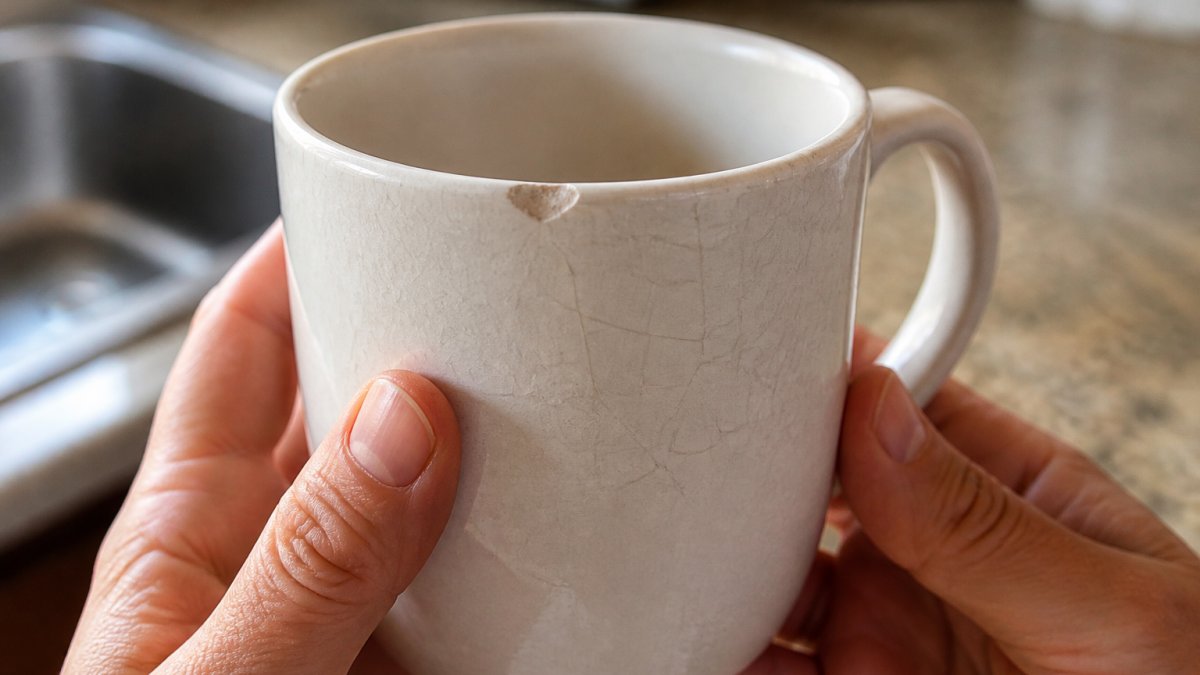
Run your fingernail across the mark. A chip catches your nail. A crack may flex or feel sharp. Crazing feels smooth because the lines sit under the surface.
Glaze Cracks and Porous Clay Beneath
Crazing looks like a spiderweb of thin lines. It happens when the glaze and clay shrink at different rates during cooling.
The real problem is what sits beneath. Once the glaze cracks, the porous clay underneath is exposed. That clay soaks up liquid, tea, and bacteria.
A crazed mug can leak slowly. You may notice a damp ring on the shelf or a faint tea seepage along the base.
Is a Chipped Mug Safe to Use?
A chipped mug is not safe to drink from if the chip exposes the clay body underneath the glaze. That exposed clay is porous and can trap bacteria. A mug with a crack that runs through the wall is also unsafe.
Small rim chips are the risky ones. Your lips touch that spot every time you drink.
- Tiny chip on the base or handle: usually fine to keep using
- Chip on the drinking rim: retire it
- Any crack through the body: retire it
- Crazing with dark lines: retire it
Food safety matters more than sentiment. A mug you love is not worth a mouthful of bacteria.
How to Repair a Chipped Ceramic Mug
You can repair a chipped ceramic mug for decorative use, but a food-safe repair is hard to guarantee. If the chip sits on the rim, we do not recommend repairing it for drinking.
For a mug you want to keep as a planter or pen cup, here is the process:
- Clean the chip and let it dry fully.
- Fill the gap with a gap-filling adhesive rated for ceramics.
- Smooth the surface with a small tool.
- Let it cure for the full time on the label.
- Sand gently if the edge feels rough.
Some people use touch-up glaze or ceramic paint for looks. These fix appearance, not safety. A repaired rim still should not touch your mouth.
When to Retire a Mug and What to Look For
Retire a mug when the damage reaches the drinking surface, when it leaks, or when the crack grows. Sentiment is real, but safety wins.
Watch for these signs:
- A chip on the rim or inside lip
- A crack you can feel with a fingernail
- Dark lines in the crazing
- A damp ring under the mug
- A handle that wiggles
If you see any of these, it is time. A cracked cup or broken mug can cut you or harbor bacteria.
When you are ready to replace it, look for high-quality ceramic mugs with a smooth, even glaze and no visible flaws. At Bitch Alert, our novelty drinkware comes in multiple sizes, so you can find a mug that matches your personality.
Frequently Asked Questions
Why do ceramic mugs chip so easily?
Ceramic mugs chip because the fired clay is hard but brittle. A knock against a sink, countertop, or another mug concentrates force on the rim or handle, where the material is thinnest. Glaze adds a glass-like layer that can flake off at the impact point, exposing the porous clay beneath. Thin rims and unsupported handles chip more often than thicker, well-formed ones.
Can thermal shock chip a ceramic mug?
Thermal shock can crack or chip a ceramic mug when the temperature changes too fast. Pouring boiling water into a cold mug, or rinsing a hot mug under cold water, makes the material expand and contract unevenly. Stoneware and earthenware are more vulnerable than porcelain. Let mugs warm gradually and avoid sudden temperature swings to reduce the risk.
Is a chipped mug safe to use?
A chipped mug is safe to use only if the chip is small, the glaze around it is intact, and the surface is smooth. If the chip exposes rough, porous clay, bacteria can collect in the gap and the mug becomes hard to clean. Discard any mug with a deep chip, a crack that leaks, or a chipped drinking surface that could cut your lip.
How do I repair a chipped ceramic mug?
Clean and dry the chip, then fill it with a food-safe, gap-filling adhesive or a touch-up glaze made for ceramics. Let it cure fully before use. For decorative mugs, ceramic paint works on non-drinking surfaces. Repair is a practical fix, not a permanent one: heat, dishwashing, and microwaving can weaken the bond, so treat repaired mugs gently or retire them.
Chipped mugs are a small annoyance with a simple fix: understand the cause, prevent the damage, and know when to let go. If you are ready for a mug that brings attitude to your morning, explore the Bitch Alert novelty drinkware collection. Our mugs feature bold, expressive designs, come in multiple sizes, and are made for everyday use. Get started with Bitch Alert and find a mug that fits your vibe.